“Tell me, what is it you plan to do with your one wild and precious life?” wrote the poet, Mary Oliver. And if she were alive today, she might rephrase that to include the world “long” to describe your life; because, according to research, we are indeed living longer.
If you were born in the developing world today, you have a 50/50 chance of seeing past 100, and if you are already born (and reading this) you have a good chance of pushing the centurion mark, as well! So, buckle up, folks; because if you’re unprepared, you’re in for a long and bumpy ride!…
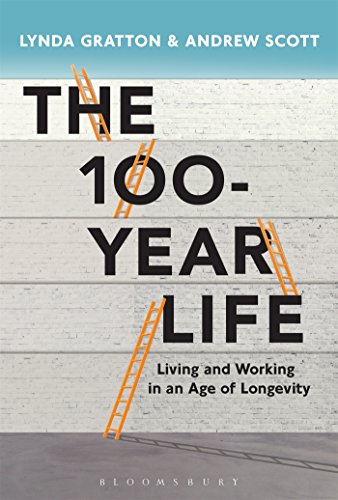
In Lynda Gratton and Andrew Scott’s “The 100-Year Life: Living and Working in an Age of Longevity,” we take a look at the consequences of a growing life expectancy across diverse aspects of our lives, such as work, relationships, and personal development.
Since the authors argue for a reevaluation of societal norms and individual expectations to effectively navigate the challenges and embrace the opportunities stemming from the prospect of an extended lifespan, I’ve gone ahead and researched how centurions who are already living happily do it, and present my findings to you in this podcast episode.
To listen to “The 100-Year Life” on audible, or read the book, click these links.
Check out the podcast here, and for a summary of the book’s major themes see below:
Understanding Longevity
The essence of longevity extends beyond mere years added to life; it involves enriching life itself, urging readers to perceive extended lifespans as opportunities for personal growth, development, and fulfillment. Learn more.
The Evolving Nature of Work
The conventional linear career trajectory — education, work, retirement — is obsolete and inadequate for a life that spans a century. Instead, the authors advocate for a more flexible career approach, encouraging individuals to pursue multiple careers or reinvent themselves at various life stages. Learn more.
Rethinking Education
Sustaining relevance and competitiveness in a world characterized by continuous technological advancements and evolving job requirements necessitates lifelong learning. The authors further recommend a more adaptable and modular education system, empowering individuals to acquire new skills and knowledge as the need arises throughout their lifetimes. Learn more.
Financial Implications
Conventional retirement schemes might fall short in sustaining an extended retirement duration, prompting the need for innovative financial planning approaches. It is crucial for individuals to commence saving and investing at an earlier stage in life, while employers must adjust pension and retirement systems to align with the increased longevity of individuals. The idea of a “financial life staircase” is presented, underscoring the importance for individuals to strategize for numerous income-generating stages throughout their lifetimes. Learn more.
Health and Well-being
The authors emphasize the significance of taking a proactive approach to health management, which involves regular exercise, maintaining a healthy diet, and prioritizing mental well-being. Additionally, they recognize the contribution of medical advancements in elongating healthy lifespans and advocate for a change in societal perspectives on aging. Learn more.
Relationships and Intergenerational Dynamics
The idea of an “intergenerational life” is presented, underscoring the necessity for cooperation and reciprocal support among various age groups. This involves gaining insights from older generations and tapping into the vitality and ingenuity of younger generations. The authors contend that embracing intergenerational collaboration has the potential to enrich individual lives and fortify communities. Learn more.
Redefining Success and Fulfillment
Gratton and Scott underscore the significance of discovering purpose and meaning in life, irrespective of age. They assert that an extended lifespan offers the chance to pursue one’s passions, contribute to society, and effect positive change. The book encourages individuals to contemplate their values and priorities, steering them toward a more comprehensive and gratifying approach to life. Learn more.
Policy and Societal Changes
The book urges policymakers to explore inventive solutions, such as portable benefits that individuals can carry throughout various careers, and to tackle concerns regarding inequality and access to opportunities. By nurturing a more inclusive and supportive society, policymakers can play a crucial role in enhancing the well-being and success of individuals navigating the challenges of the 100-year life. Learn more.
Conclusion
“The 100-Year Life: Living and Working in an Age of Longevity” provides a thorough examination of the challenges and opportunities linked to extended lifespans. Lynda Gratton and Andrew Scott present a persuasive vision for reimagining our strategies in work, education, relationships, and personal development to effectively address the implications of a longer life expectancy.
Listen to “The 100-Year Life” on audible or read the book today!
 The Care and Feeding of Sex Symbols