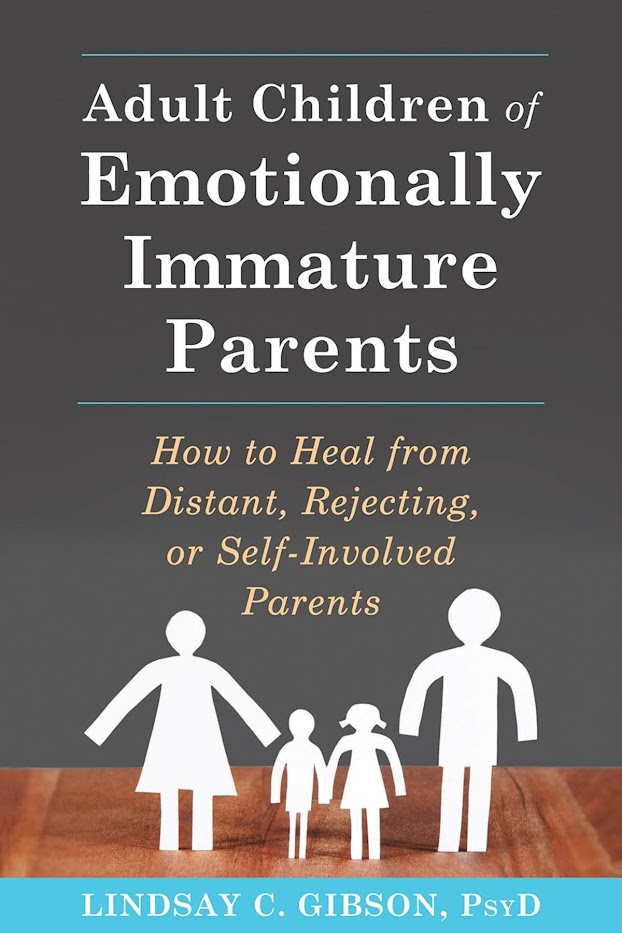
Have you been dealing with “bad parents” your whole life?… Just now learning to accept that your mom and/or dad will never change?… Do you lose sleep wondering how you can make sure that you don’t end up just like your “toxic parents?” Or are you just plain ‘ol looking to heal from a bad childhood and “get over it” already? Well, if any of that is the case, Lindsay C. Gibson’s book “Adult Children of Emotionally Immature Parents: How to Heal from Distant, Rejecting, and Self-Involved Parents” may be exactly what you need.
Adult Children of Emotionally Immature Parents not only (1) defines emotional immaturity in parents, outlining key traits such as self-centeredness, a lack of empathy, and difficulty in connecting emotionally with their children, and (2) clarifies the lasting effects on the adult children’s emotional well-being and relationships, but (3) it equips its readers with the tools they need to break free from the patterns of the past and build healthier, more fulfilling lives. (And as you can see from the podcast below, that is no easy feat.)
To listen to “Adult Children of Emotionally Immature Parents” on audible, or read the book, click these links.
You can also check out the podcast here where I discuss the book; and for a summary of the book’s major themes see below:
Impact of Emotional Immaturity
Adult Children of Emotionally Immature Parents delves into the enduring impacts of being raised by emotionally immature parents, shedding light on obstacles like the struggle to establish wholesome relationships, battles with self-worth, and difficulties in articulating emotions. Drawing from real-life instances and case studies, she vividly portrays the diverse manifestations of emotional immaturity and its consequential influence on the lives of adult children.
Gibson discusses specific coping mechanisms that adult children may develop to navigate relationships and the world, emphasizing that these coping strategies, while initially adaptive, can become obstacles to forming authentic connections and embracing emotional well-being. Learn more.
Understanding Coping Mechanisms
The book delves into the various coping mechanisms that adult children of emotionally immature parents often adopt, such as people-pleasing, perfectionism, and avoiding conflict. Gibson explains how these strategies, developed as survival mechanisms during childhood, can hinder personal growth and fulfillment in adulthood. Learn more.
Reparenting and Self-Compassion
One key concept introduced by Gibson is “reparenting.” This involves recognizing the emotional gaps from childhood and learning to provide oneself with the support and understanding that may have been lacking. The author guides readers through practical exercises and strategies to help them identify and address their emotional wounds. Central to this process is the cultivation of self-compassion, as Gibson emphasizes the importance of treating oneself with the same kindness and understanding one would offer to a friend. Learn more.
Setting Boundaries
The book underscores the significance of setting boundaries as a crucial step in healing from the effects of emotionally immature parenting. Gibson provides guidance on recognizing and establishing healthy boundaries, empowering readers to protect their emotional well-being and foster more fulfilling relationships. Learn more.
Health and Well-being
The authors emphasize the significance of taking a proactive approach to health management, which involves regular exercise, maintaining a healthy diet, and prioritizing mental well-being. Additionally, they recognize the contribution of medical advancements in elongating healthy lifespans and advocate for a change in societal perspectives on aging. Learn more.
Developing Self-Awareness
Self-awareness is another cornerstone of the healing process discussed in the book. Gibson encourages readers to explore their emotions, beliefs, and patterns of behavior, helping them gain insight into how their upbringing may have shaped their current experiences. Through self-awareness, individuals can break free from automatic, ingrained reactions and make more conscious choices in their lives. Learn more.
Practical Strategies for Healing
Throughout the book, practical strategies are presented to aid readers in their healing journey. These strategies include journaling exercises, mindfulness practices, and communication techniques to enhance emotional expression and connection with others. Learn more.
Conclusion
“Adult Children of Emotionally Immature Parents” is a compassionate and empowering guide for individuals seeking to overcome the challenges associated with growing up in an emotionally immature environment. Dr. Gibson provides a roadmap for healing, emphasizing the importance of self-compassion, setting boundaries, and developing self-awareness. With its blend of psychological insights and practical exercises, the book equips readers with the tools they need to break free from the patterns of the past and build healthier, more fulfilling lives. Ultimately, it serves as a beacon of hope for those on the journey toward healing and self-discovery. Learn more.
Listen to “Adult Children of Emotionally Immature Parents” on audible or read the book today!
 The Care and Feeding of Sex Symbols