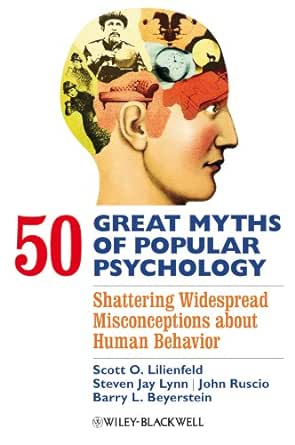
Despite the fact that “50 Great Myths of Popular Psychology” is bound to make you highly obnoxious at dinner parties as you go around constantly correcting people on their popular misconceptions, I still can’t help but recommend the book highly enough as it’s a mind-altering game changer. Below is a summary of what the book is about, but I must warn you, only read it if you are willing to change the way you think. Oh, and it’s also a fun “read” on audible.
Enjoy!
“50 Great Myths of Popular Psychology: Shattering Widespread Misconceptions about Human Behavior” is a thought-provoking book written by Scott O. Lilienfeld, Steven Jay Lynn, John Ruscio, and Barry L. Beyerstein. The authors delve into common misconceptions surrounding various aspects of human behavior, dismantling popular myths that have permeated mainstream psychology.
The book is structured around 50 widely believed myths, each thoroughly examined and debunked through empirical evidence and critical analysis. The myths cover a broad spectrum of topics ranging from memory and perception to intelligence and emotions. By dispelling these myths, the authors aim to promote a more accurate understanding of human behavior and psychology.
One prevalent myth explored in the book is the idea that people only use 10% of their brains. The authors argue that this misconception has no scientific basis and is a misinterpretation of neurological research. In reality, different areas of the brain are active at different times, and the brain operates at near full capacity for various cognitive tasks.
Another myth tackled is the notion that playing classical music to infants can make them smarter, commonly known as the Mozart effect. The authors present evidence suggesting that while music may have temporary effects on cognitive performance, there is no substantial evidence to support the idea that exposing infants to classical music will significantly enhance their long-term intelligence.
The book also challenges the belief in lie detectors as foolproof devices for detecting deception. Scientific studies indicate that polygraph tests are not infallible and can produce both false positives and false negatives. The authors emphasize the importance of understanding the limitations of lie detectors in legal and forensic contexts.
A noteworthy section addresses the myth that repression is a common and effective defense mechanism. The authors argue that the concept of repressed memories is fraught with controversy and lacks consistent empirical support. They caution against relying on repressed memories in legal or therapeutic settings due to the potential for misinformation and false memories.
The authors explore the widely held belief that opposites attract in the realm of romantic relationships. Contrary to this notion, research suggests that individuals are more likely to be attracted to those with similar values, interests, and backgrounds. The book challenges the romanticized idea of opposites attracting, shedding light on the importance of shared values in successful relationships.
Throughout the book, the authors emphasize the importance of critical thinking and skepticism in evaluating psychological claims. They encourage readers to question popular beliefs and scrutinize the evidence behind commonly accepted notions. By debunking these myths, the authors aim to foster a more scientifically informed understanding of human behavior.
In conclusion, “50 Great Myths of Popular Psychology” serves as a compelling and accessible resource for readers interested in psychology and human behavior. The authors skillfully dismantle widespread misconceptions, providing a nuanced and evidence-based perspective on various aspects of psychology. The book’s engaging style and comprehensive coverage make it a valuable read for both psychology enthusiasts and the general public, challenging preconceived notions and promoting a more accurate understanding of the complexities of human behavior.
Listen to “50 Great Myths of Popular Psychology” on audible or read the book today!
 The Care and Feeding of Sex Symbols